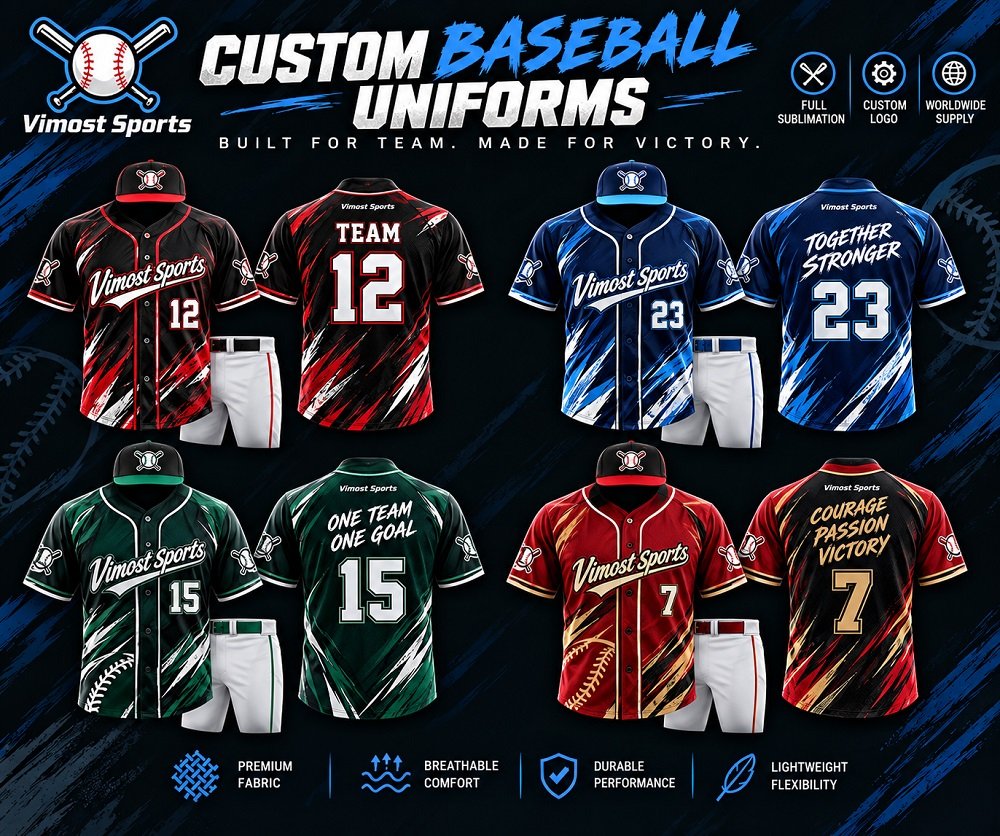
2026 Custom Baseball Jerseys: Design and Ordering Checklist
Custom Baseball Jerseys: The Complete Design and Ordering Checklist
Custom baseball jerseys have grown far beyond the professional diamond. Today they are worn by amateur league teams, college clubs, corporate softball squads, youth travel teams, and fans who want a personal touch. A custom jersey is a statement of identity: it unifies a group, advertises a brand, and builds team spirit. Yet the road from “we want custom jerseys” to “the boxes arrive at the field” is longer than most people expect. Between fabric choices, artwork files, samples, quotes, and production schedules, there are dozens of details that can quietly go wrong. Miss one, and you may face blurry logos, wrong sizes, late deliveries, or a budget that silently doubled. This article lays out a complete, practical checklist — first for designing your jersey, then for ordering it — so that your team gets exactly what it imagined, on time and on budget.
Part One: The Design Checklist
Custom baseball jerseys Design is where most decisions are made, and where most mistakes are born. Work through the following points before you ever contact a supplier.
1. Fabric and material. Custom baseball jerseys Nearly all modern baseball jerseys are made from polyester blends. Performance mesh wicks moisture away and stays light in summer heat, while a heavier knit or tricot fabric feels more substantial and drapes like a traditional uniform. Ask about fabric weight (usually measured in grams per square meter) and breathability; a jersey that looks great but traps heat will be abandoned after one game. Also decide on the trim: buttons, zippers, or a simple pullover collar. Full-button fronts look classic and pro-style; pullover jerseys are cheaper and easier to produce.
2. Style and cut. Custom Baseball jerseys come in several silhouettes. The traditional full-button style with a collar is the timeless choice, while the raglan-sleeve pullover offers a more modern, athletic look. You must also choose sleeve length (short or three-quarter) and whether you want piping along the sleeves or collar. Ordering for a mixed group? Confirm that the supplier offers men’s, women’s, and youth cuts — women’s jerseys are usually cut differently through the shoulders and waist rather than being a scaled-down men’s version.
3. Colors. Lock down your colors early and in writing. If your team or company has brand colors, provide Pantone (PMS) references so the factory can match them precisely. Remember that the base color and the accent colors (piping, trims, logos) must work together, and that your numbers and names need enough contrast against the background to be readable from the stands. If you are ordering sublimated jerseys, almost any color combination is possible; if you are screen-printing, each color adds cost, so simplify your palette.
4. Logo placement. Decide exactly where every graphic goes: large logo on the front chest, small logo on the left chest, logos on each sleeve, a team name across the back, and an optional chest number. Draw a simple placement diagram and include it in your artwork file. This prevents the classic failure of a logo that is perfectly sized but placed where the sleeve seam cuts through it.
5. Names and numbers. Every league has expectations about numbering. Adult jersey back numbers are typically 8 to 10 inches tall, and the surname above them is usually 3 to 4 inches. Choose a font — block, italic, or script — that stays readable and fits your team’s personality. Then decide the production method: tackle twill (stitched fabric letters, the classic pro look), sublimation (printed into the fabric, nothing to peel), or screen/heat transfer (budget-friendly). If players will wear the jerseys season after season, tackle twill and sublimation are worth the extra cost.
6. Decoration method. The decoration method is the single biggest driver of both look and price. Dye-sublimation prints full-color designs directly into the fabric — perfect for complex graphics, gradients, and all-over designs, with nothing that cracks or peels. Screen printing is cheaper for simple flat-color logos but adds a setup charge per color. Embroidery suits chest logos and caps but is too heavy for large back numbers. Ask your supplier which methods they recommend for your design and order size, and request swatch samples before committing.
7. Fit and sizing. Sizes are not universal. Always ask for the supplier’s own size chart and measure a player’s chest, jersey length, and sleeve length against it. Athletic cuts run slimmer, relaxed cuts run boxier, and youth sizing is completely different from adult. When in doubt, order a sample in the most common size, have a player try it on, and adjust the size distribution before the bulk order.
Part Two: The Ordering Checklist
Custom baseball jerseys Once the design is settled, ordering is a series of checks that protect your time and money.
1. Lock your numbers. Before asking for a quote, know your quantity, your size breakdown, and your hard deadline (the first game or tournament date). These three numbers decide everything else — unit price, lead time, and shipping cost.
2. Prepare clean artwork. Provide vector files (AI, EPS, or SVG) rather than screenshots or low-resolution JPEGs. Include your Pantone colors, fonts, and the placement diagram. If you are using a logo owned by someone else — including professional league logos — confirm you have the rights to use it; suppliers will not (and should not) reproduce copyrighted marks without authorization.
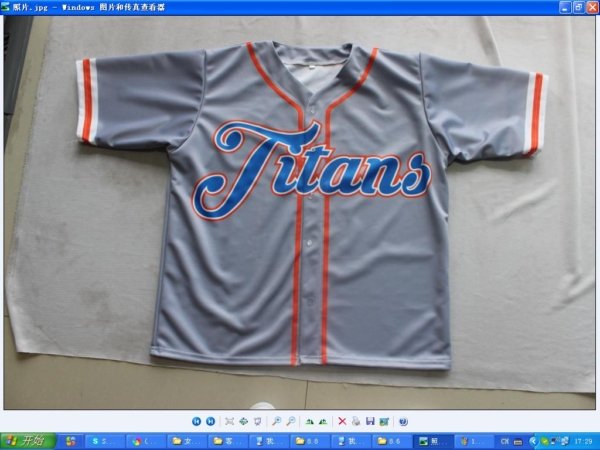
3. Approve samples and proofs. Never skip this step. First you will receive a digital proof (a mockup of the jersey); check every detail — colors, logo position, number size — and sign it off in writing. Then, for larger orders, request a physical sample and inspect the fabric, stitching, and print quality with your own hands. The golden rule: no written approval, no production.
4. Read the quote carefully. A good quote shows a line-by-line breakdown: unit price, per-piece decoration cost, setup or screen fees, sample cost, shipping, and any taxes or duties. Compare at least two or three suppliers on the same specification, and ask how the unit price changes at higher quantities — bulk tiers can save 20 percent or more.
5. Plan lead time and shipping. Typical production runs take two to four weeks, and international shipping adds another week or more. Ask the supplier for their production calendar, add a safety buffer of at least a week, and work backwards from your deadline. If the date is non-negotiable, say so in the first email; reliable suppliers will tell you honestly whether they can meet it.
6. Clarify payment and policies. Custom baseball jerseys Most suppliers ask for a deposit of 30 to 50 percent, with the balance due before shipment. Ask about their policy on errors: who pays if the bulk order does not match the approved sample? What is the rework or refund process? A supplier that hesitates to answer these questions is a warning sign.
7. Inspect before you distribute. Custom baseball jersyes When the shipment arrives, compare it against your approved sample: check colors under daylight, inspect seams and hems, and spot-check sizes across the size chart. Do this before you hand jerseys to players — fixing one bad batch before distribution is far cheaper than reordering after complaints.
8. Plan for the future. Custom baseball jerseys Keep your approved artwork files, your supplier contact, and your order details organized. Order 10 to 15 percent extra in the most common sizes so you can replace lost or damaged jerseys without a rush reorder, and note that reorders from the same files are usually faster and cheaper than starting from scratch.
- Skipping sample approval and trusting the digital proof alone.
- Sending low-resolution artwork that looks fine on screen but blurs in print.
- Ignoring the size chart and guessing sizes.
- Forgetting about copyrighted logos and league marks.
- Leaving no buffer in the schedule for production delays.
- Ordering exactly enough jerseys with no extras for replacements.
Conclusion
A custom baseball jersey is a small product with a long checklist behind it. If you get the design right — fabric, style, colors, logos, numbers, and decoration method — and then protect the order with clean artwork, approved samples, a transparent quote, and a realistic timeline, the result is a uniform your team is proud to wear for years. Work the checklist from front to back, keep everything in writing, and the whole process stops being a gamble and becomes a plan.
Explore our Custom Ice Hockey Uniforms page to see available options and product examples.
If you already have a logo, team colors, approximate quantity or reference design, contact Vimost Sports and send us your project requirements to start discussing your custom hockey uniform project.
If anything, please check our website